
 Search
 Cart
Cart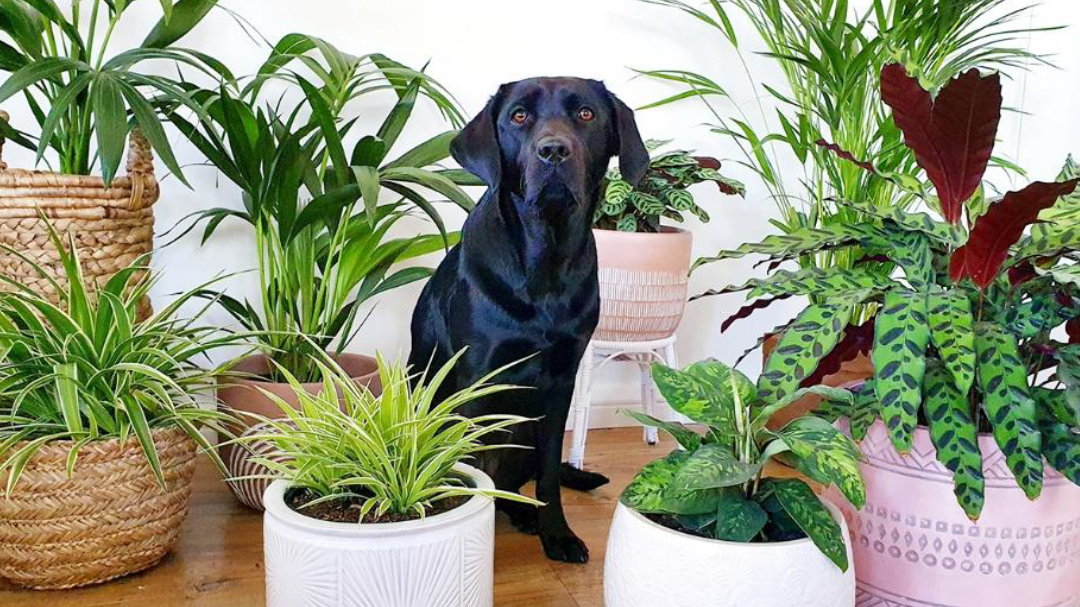
By Kathy Torres
Growing up, my family always had a dog or a cat (sometimes both) as well as parakeets, hamsters, and tropical fish. Because my Dad was in the Army, we moved a lot, and when we did, we had quite the menagerie of pets that traveled along with us. It was comical, as I recall. As an adult, I became a bit more practical. Currently, Sam, a 65-pound Catahoula mix is almost more than my husband and I can handle. We can’t keep food on the kitchen counter or ANYWHERE within his reach, or it will swiftly disappear! He eats lizards, frogs and anything else that moves in the yard, as well as leaves, sticks, and even dirt. What am I leading up to with this personal pet background story? Well, because he will eat just about anything, I’m really careful about indoor plants that I have in my home because I believe Sam wouldn’t think twice about munching on them. There are many houseplants that are toxic to dogs, so it’s important to me to select the ones that are safe, just in case.
There are many beautiful houseplant varieties that add greenery to home décor, improve air quality AND they are NON-TOXIC to dogs and cats. Here are just a few to consider if you have a pet that is a muncher:
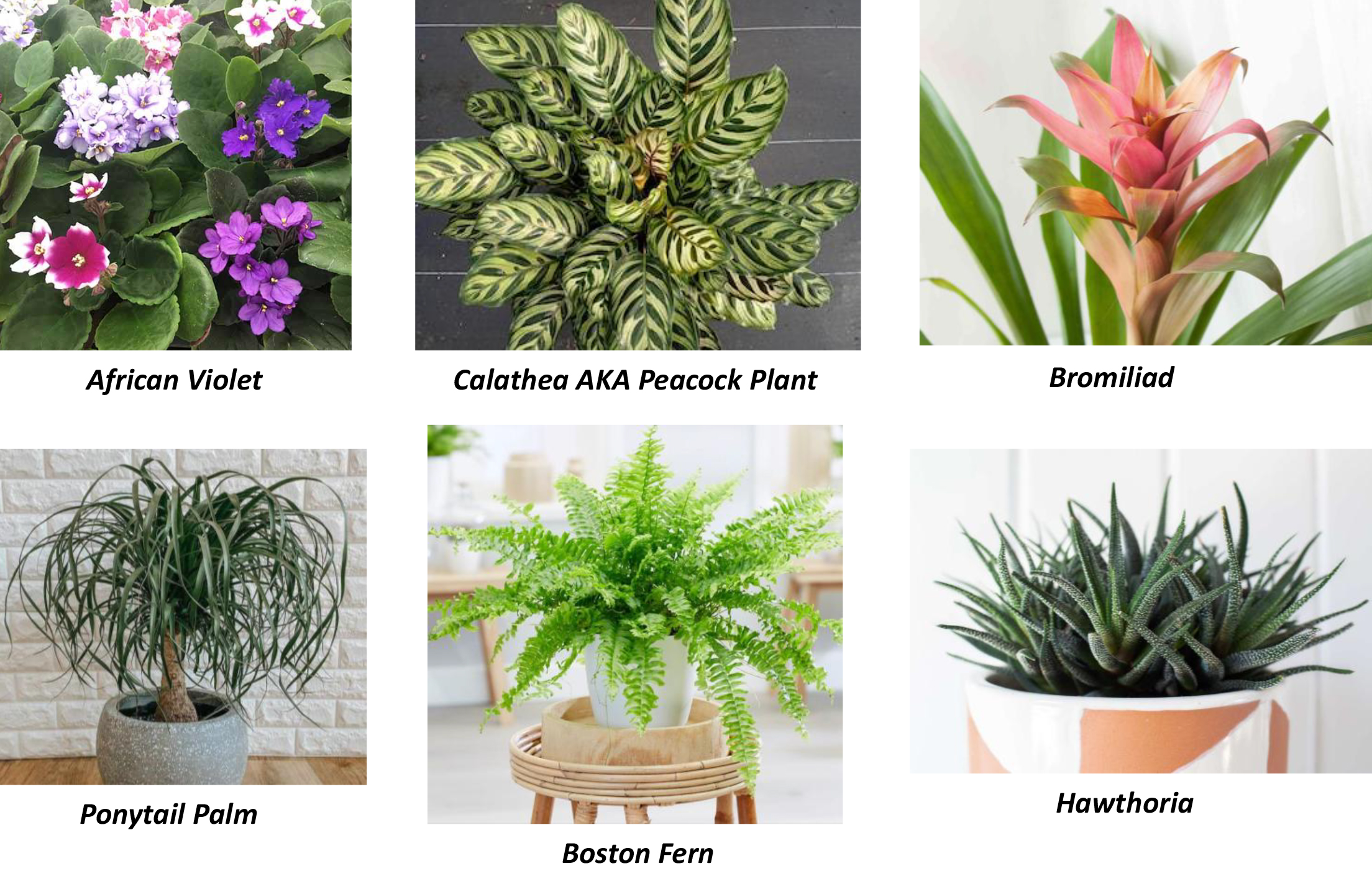
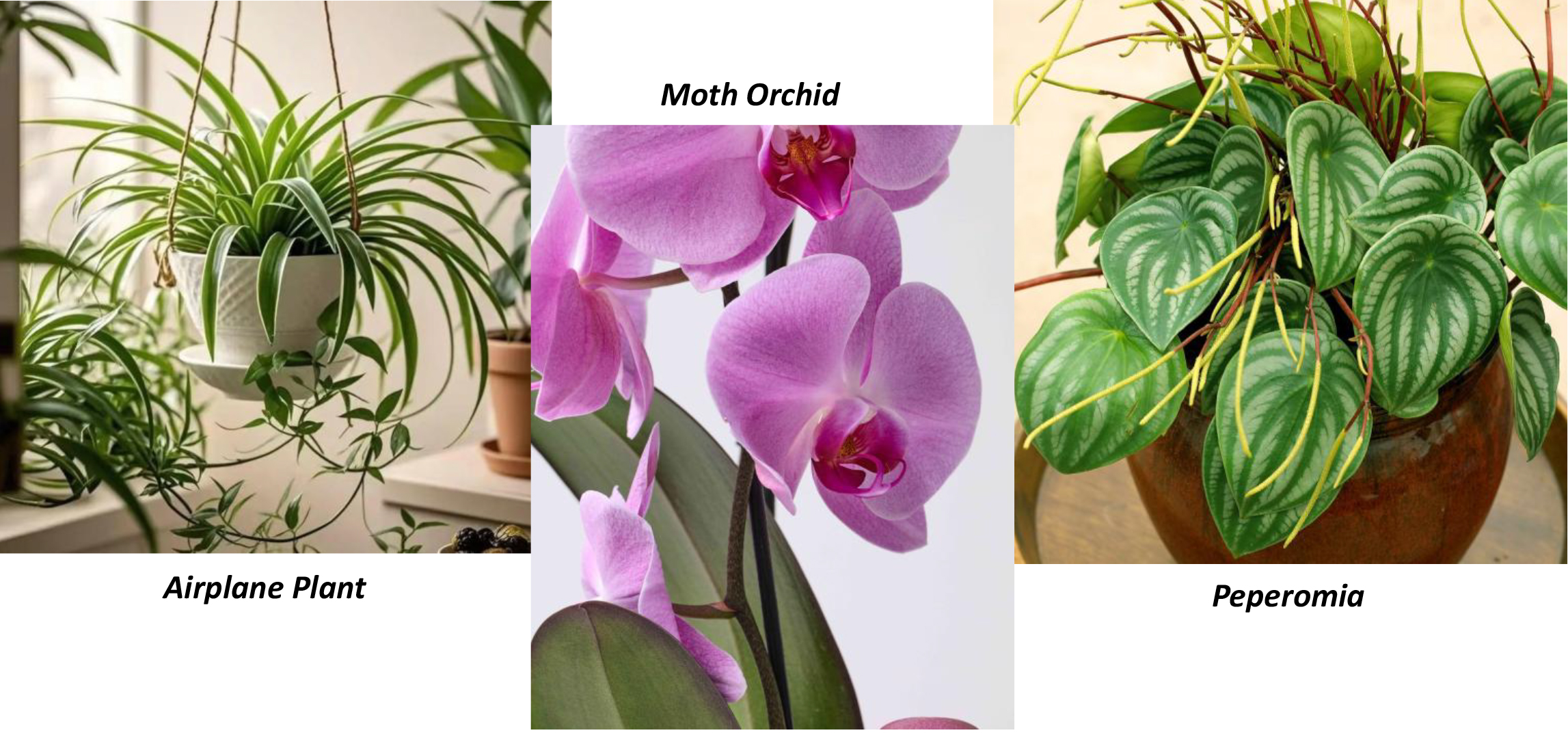
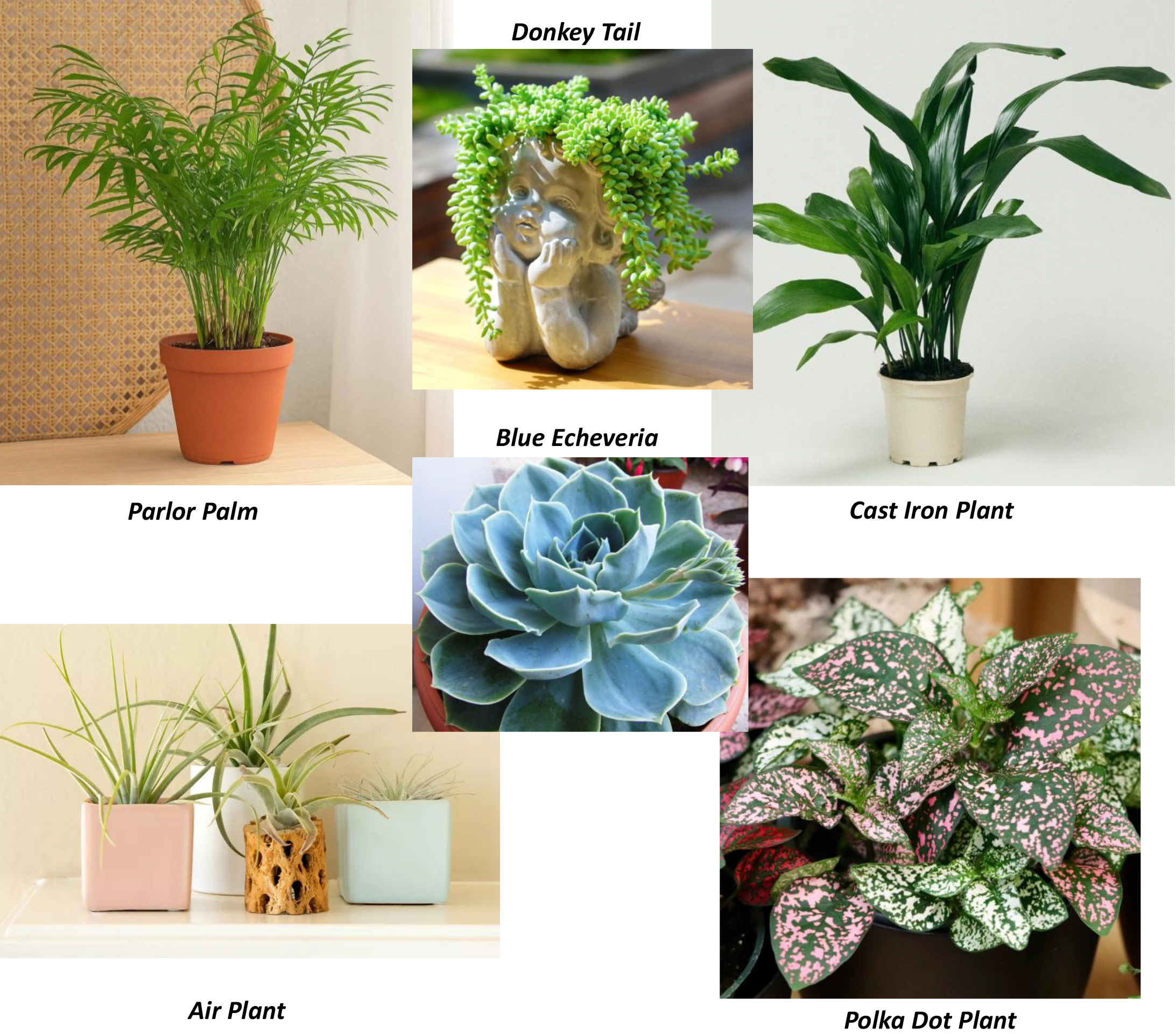
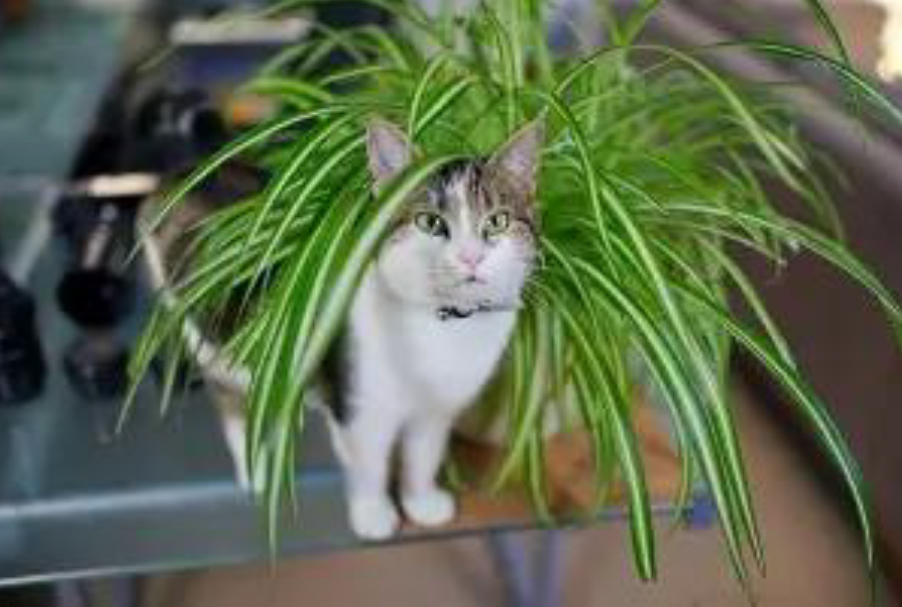
While the plants shown are considered NON-TOXIC to pets, it’s wise to make sure that your dog or cat doesn’t ingest a large portion of any of them. The effects should not be traumatic, however digestive problems like vomiting or diarrhea may result. Keeping plants on a table or high shelf can discourage pets from nibbling. Spending time training them to stay away from plants is also a good idea. Of course, dogs will be dogs and cats will be cats, so that brings us back to our obligation to protect them. If you have plants in your home and you wish to find out if they are toxic to pets, you can access the ASPCA’s
(American Society for the Prevention of Cruelty to Animals) list of poisonous plants by clicking HERE. Search by plant name and learn whether it is toxic or non-toxic to dogs or cats.
Some common house plants TOXIC to pets are: Aloe, Amaryllis, Asparagus Fern, Dieffenbachia, Easter Lily, English Ivy, Fiddle Leaf Fig, Kalanchoe, Peace Lily, Philodendron, Poinsettia, and Snake Plant. If you have any of these in your home and have a pet, you should rethink or make sure they are not accessible to your 4-legged buddy.
Indoor plants, just like plants in the landscape, need fertilizer on a regular basis to flourish. Make sure that any fertilizer you use is non-toxic to pets.
Wingard’s green house is a great place to find a wide variety of houseplants to add to your home. Talk with a staff member for advice on plants that are safe for pets and get the scoop on their specific needs. If you have never had live plants in your home, you may need a little education on caring for them. Most are fairly easy and quite honestly, will do best if you ignore them a bit. Here are a few things to know:
- Provide adequate natural light. Place in a bright room where the plant will receive indirect sunlight, not too close to a window. Avoid direct sunlight (may be too harsh in summer). Fluorescent or plant lights are acceptable if natural light is not available.
- Don’t put plants near drafty windows and doors, vents or a fireplace.
- Don’t over-water! This is the most common mistake and causes roots to rot. Let soil dry out in between waterings. If foliage begins to turn pale, you are likely overwatering. If it turns brown and becomes crispy, it needs more water.
For more on this topic, check out Wingard’s Blog on Indoor Plants (click HERE).

We think of our pets as members of the family, and as such, they really deserve to be loved and cared for. I do love my dog, Sam, (even when he’s a handful). I also love my houseplants. It takes some effort to make sure the two can live in harmony and good health, but it’s worth it. Looks like Sam’s doing OK, don’t ya think?